






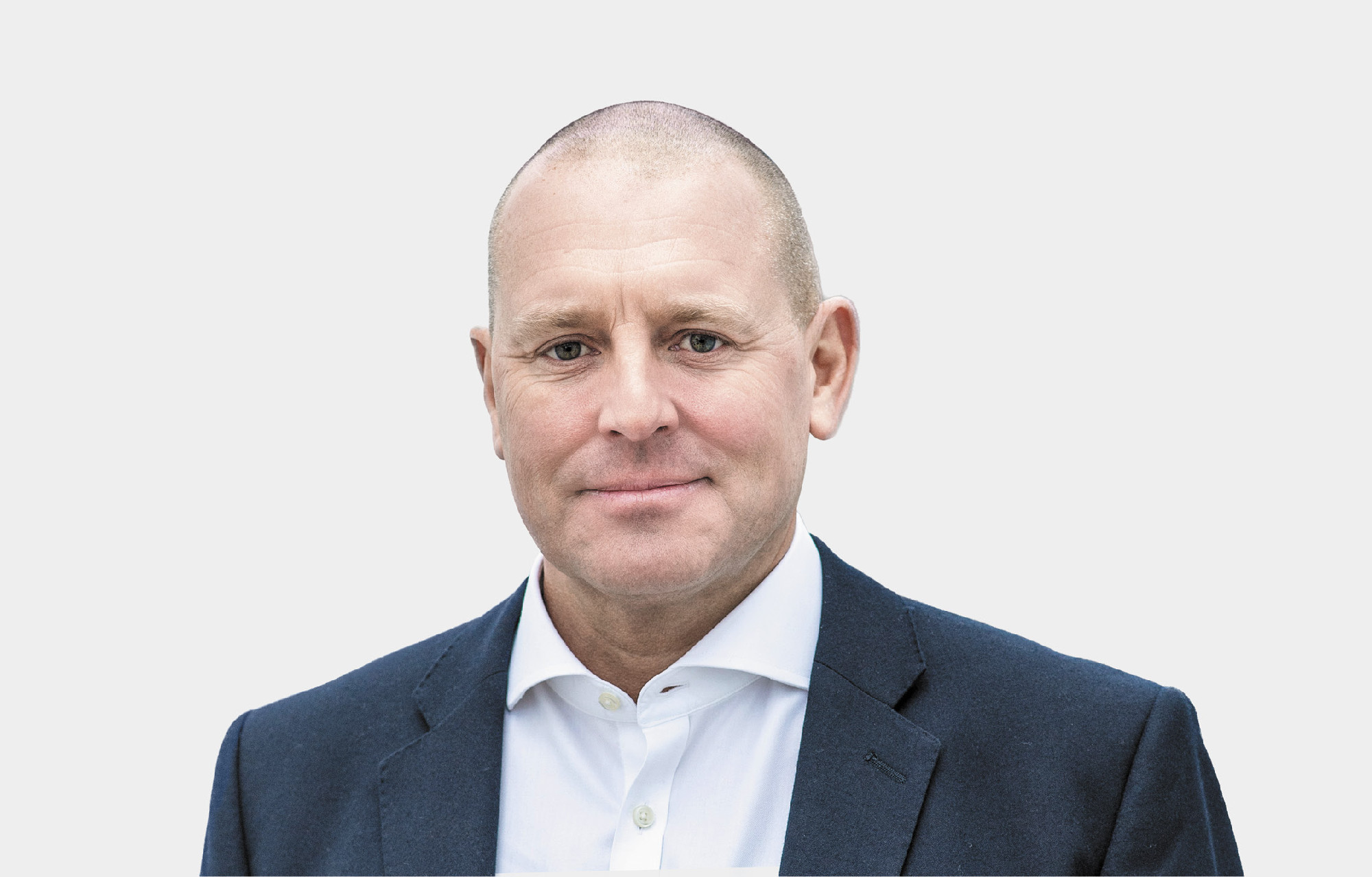
“
The underlying business performance of the Oakley Funds’ portfolio companies and direct investments is a key focus for both the Committee and OCI’s Auditor.
Richard Lightowler Chair of the Audit Committee
Other Audit Committee members:
Fiona Beck Committee member
Caroline Foulger Committee member
Achievements in 2023
- Robust review of valuation approach and assumptions in light of volatile macro-economic conditions. Conclusion that investments continue to be fairly valued through external training, developed competencies in ESG reporting, including the Task Force on Climate-related Disclosures
- Assessed independence and quality of external auditors
- Appointment of new third-party independent valuation provider and consideration of results and quality of work performed
- Reviewed the non-audit services policy
Objectives for 2024
- Continued oversight of valuation process supporting the integrity of reported NAV
- Oversight and assessment of quality of financial reporting, internal controls and external audit
- Continued focus on transparent reporting
- Consider independence and quality of alternate external audit firms; additionally, consider timing and appropriateness of tender process
Audit Committee role
Ensures fair, balanced and understandable reporting of Company results and valuations.
The principal role of the Audit Committee is to consider the following matters and make appropriate recommendations to the Board to ensure that:
- the integrity of financial reporting and the Annual Report, taken as a whole, is fair, balanced and understandable and provides the information necessary for shareholders to assess the Company’s performance, business model and strategy;
- the independence, objectivity and effectiveness of the appointed Auditor is monitored and reviewed. The Committee additionally reviews the Auditor’s performance in terms of quality, control and value and considers whether shareholders would be better served by a change of Auditor; and
- the financial reporting internal control systems of the Company are adequate and effective.
The Audit Committee met six times during 2023. It formally reports to the Board on its proceedings after each meeting. Attendance is summarised as part of the report by the Nomination Committee of the Board.
Significant estimates
The most significant estimates in the Company’s Financial Statements are the fair value of the Oakley Funds and the fair value of direct investments.
Key elements considered by the Audit Committee in its consideration of fair values of Oakley funds are:
- valuation approach to underlying portfolio companies – understanding input data, assumptions and methodologies used;
- consistency in valuation approach;
- investments are valued in accordance with the International Private Equity and Venture Capital (IPEV) Valuation Guidelines;
- results of independent, third-party valuation engagement commissioned by the Investment Adviser, which produces an annual independent valuation of each portfolio company;
- results of backtesting performed by the Investment Adviser comparing realisations against carrying values on disposal;
- internal controls, including the work of the Valuation Committee at the Investment Adviser; and
- results of the independent audit, including detailed discussions with the audit team.
The continued conflict between Russia and Ukraine throughout 2023, combined with increasing tensions and conflict in the Middle East continue to drive a prolonged period of economic and geopolitical uncertainty, with stubborn levels of inflation and high interest rates impacting many businesses. The Committee remains focused on how these impacts have been addressed in the assumptions and methods used in the valuations. Specifically, the potential impacts of economic downturns and inflation on portfolio company operating performance, the impact of interest rates on valuation multiples, the quality, and relevance of comparables use, general market activity, and the availability of credit and its impact on fund credit facilities and therefore the Company’s cash flow and liquidity.
During the year, OCI’s direct debt investments with North Sails were converted into preferred equity. In its consideration of the fair value, for this restructuring of the Committee:
- obtained and reviewed detailed valuation documents provided by the Investment Adviser, which includes trading performance of counterparties, out-turn and return analysis for OCI following the debt-to-equity conversion, and fair value estimates;
- commissioned an independent, third-party valuation adviser to produce an independent valuation for the preferred equity investment with North Sails; and
- considered the results of the work of the independent Auditor.
As part of the liquidation of Fund I, OCI’s direct debt investment with Fund I was settled via the transfer of shares in Time Out, and its holding in Fund I was repaid by a distribution in specie of Time Out shares. This resulted in the Company's ownership in Time Out now being direct rather than indirect. In its consideration of the fair value, the Committee:
- obtained and reviewed the Investment Adviser’s assessment of the volume and level of activity of the Time Out shares and the appropriateness of the fair value to be measured at the quoted market price on the measurement date; and
- considered whether a discount of the quoted value of Time Out shares in the settlement was appropriate, ultimately concluding that it was not.
The Audit Committee concluded that the valuation process was effective in providing fair value estimates for both the fund and direct investments. It also noted that the valuation process, internal controls and accounting principles used were consistent with previous years.
Except for the independent, third-party valuation reports and external audits that are performed at year-end only, the valuation process is also consistent with the quarterly processes.
“
The Committee remains focused on how macro-economic factors have been addressed in the assumptions and methods used in the valuations.
Richard Lightowler Chair of the Audit Committee
Financial reporting internal controls
Financial reporting and administration functions of the Company are mostly outsourced to Oakley through an Investment Advisory and Operational Services Agreement. The Committee is provided with documents detailing the key internal controls in the financial reporting process. Further, it has regular access to and discussions with the finance team of Oakley as part of the regular financial reporting process. The Committee also receives regular reporting from the Oakley compliance function. On at least an annual basis the Management Engagement Committee conducts a formal assessment of the performance of Oakley, including the operating effectiveness of financial reporting controls and reports back to the Board. Through these combined activities the Audit Committee is satisfied that financial reporting internal controls are adequate and effective.
During the year, the Audit Committee reviewed and approved the publication of the quarterly NAV, the Half-yearly Report and Accounts and the dividend declarations.
The Audit Committee approved the Annual Report, confirming to the Board that financial and narrative reporting is fair, balanced and understandable.
Audit: independence and objectivity
The Committee is responsible for overseeing the relationship with the external Auditor, including (but not limited to): approval of their remuneration; approval of their terms of engagement; assessing annually their independence and objectivity; monitoring the Auditor’s compliance with relevant ethical and professional guidance on the rotation of audit partners and specialists; and assessing annually their qualifications, expertise and resources and the overall quality and effectiveness of the audit process. The Audit Committee meets with the external Auditor in person at least twice a year.
KPMG Audit Limited (KPMG or the ‘Auditor’), located in Hamilton, Bermuda, has been the Company’s Auditor since 2007. The Audit Committee reviews their performance annually. The Audit Committee considers a range of factors in determining the quality of the audit firm, including independence and objectivity, quality of service, the Auditor’s specialist expertise and the level of audit fee.

“
The Audit Committee considers a range of factors in determining the quality of the audit firm, including independence and objectivity, quality of service, the Auditor’s specialist expertise.
Richard Lightowler Chair of the Audit Committee
The Company concluded a comprehensive review and tender process of KPMG as external Auditor in 2020 and continues to be satisfied with the team and quality of services provided by the external Auditor during 2023. At the AGM in November 2023, the Board resolved to reappoint KPMG as the Company’s Auditor.
It was confirmed that KPMG was engaged to complete an audit of the Company’s Financial Statements for the year ended 31 December 2023.
Any non-audit work carried out by the Auditor must be approved in advance by the Audit Committee. In deciding whether to engage the Auditor for non-audit services, the Committee considers the impact on independence, potential conflicts of interest, the nature of the work being performed, the ability of the team conducting the work and its relationship to the audit team, and the quantum of fees in relation to the audit fee, in accordance with the Company’s non-audit services policy.
During the year, the Audit Committee approved the following non-audit services provided by KPMG:
- ESG training to the Board of Directors
The Committee is satisfied that these services do not impact Auditor independence or otherwise impact the quality of the external audit.
Consideration of independence and credentials of alternate external audit firms
The Company aims to apply the highest standards of corporate governance. Whilst the Committee is satisfied with the quality, performance and independence of KPMG, the Committee undertook a process to determine the independence and credentials of other audit firms in consideration of a future tender process. For potential firms that are not currently independent, the Committee considered the steps and timelines that would be needed to be taken by the Company, Oakley, or the audit firms to become independent to allow for and orderly and robust tender process in the future. The Committee will continue to monitor progress in this regard.
Internal control and risk management
The Audit Committee considers the potential need for an internal audit function on an annual basis and has to date concluded that adequate internal Oakley assurance processes exist to satisfy and validate the adequacy of internal controls.
No material control weaknesses or any suspicions of potential fraud were identified by the Company. The Company and its key service providers implement clear whistle-blowing and anti-bribery and corruption policies. The Company did not receive any whistle-blowing reports during 2023.
The Company engages service providers to carry out all significant operating and financial reporting activities. The Management Engagement Committee monitors the performance of all key service providers, including a consideration of their internal controls and compliance activities. The Company receives direct reporting from the service providers on internal controls, the identification of any weaknesses or significant changes in process.
On behalf of the Board.
Richard Lightowler
Chair of the Audit Committee