



Opinion
We have audited the consolidated financial statements of Oakley Capital Investments Limited and its subsidiary (“the Company”), which comprise the consolidated balance sheet as at 31 December 2024, the consolidated statements of comprehensive income, changes in equity and cash flows for the year then ended, and notes, comprising material accounting policies and other explanatory information.
In our opinion, the accompanying consolidated financial statements present fairly, in all material respects, the consolidated financial position of the Company as at 31 December 2024, and its consolidated financial performance and its consolidated cash flows for the year then ended in accordance with IFRS Accounting Standards as issued by the International Accounting Standards Board (IFRS Accounting Standards).
Basis for opinion
We conducted our audit in accordance with International Standards on Auditing (ISAs). Our responsibilities under those standards are further described in the Auditor’s responsibilities for the Audit of the Consolidated Financial Statements section of our report. We are independent of the Company in accordance with International Ethics Standards Board for Accountants International Code of Ethics for Professional Accountants (including International Independence Standards) (IESBA Code) together with the ethical requirements that are relevant to our audit of the consolidated financial statements in Bermuda and we have fulfilled our other ethical responsibilities in accordance with these requirements and the IESBA Code. We believe that the audit evidence we have obtained is sufficient and appropriate to provide a basis for our opinion.
Key audit matters
Key audit matters are those matters that, in our professional judgment, were of most significance in our audit of the consolidated financial statements of the current period. This matter was addressed in the context of our audit of the consolidated financial statements as a whole, and in forming our opinion thereon, and we do not provide a separate opinion on this matter.
Valuation of unquoted investments (Level 3)
As discussed in Notes 8 and 10 to the consolidated financial statements, the Company holds unquoted investments that are measured at fair value. The unquoted investments are the largest asset class representing 87% (2023: 77%) of the Company’s total assets. The valuations of the unquoted investments make use of significant unobservable inputs and require application of significant judgment.
Given the subjective and complex nature of the valuation process, there exists a risk that the fair values of unquoted investments may not be determined appropriately.
In responding to the key audit matter, we performed the following audit procedures for all the unquoted investments:
- Obtained an understanding of the investment valuation process and assessed the design and implementation of valuation related processes and controls.
- Assessed the appropriateness of the fair value disclosures for compliance with the relevant accounting standard.
For a sample of unquoted investments measured using the net asset value we also:
- Compared the net asset value to the audited financial statements.
- Assessed whether the net asset value was appropriately determined using the fair value principles under the relevant accounting standard by reference to the audited financial statements.
- Considered the appropriateness of the valuation methodologies applied to the unquoted fund investments.
For a sample of directly and indirectly held unquoted investments we performed the following audit procedures:
- Obtained independent confirmations of the existence and accuracy of the unquoted investments from the third parties.
- Engaged KPMG valuation specialists to challenge the methodologies and models followed in determining the fair value.
- Conducted procedures to evaluate the competence and capability of the valuation specialists engaged by the Company to prepare investment valuations.
- Tested the mathematical accuracy of the valuation models.
- Used KPMG valuation specialists to corroborate and challenge key assumptions and judgments within Company's valuation models, including the composition and completeness of the basket of comparable listed entities, multiples and discount rates used.
- Performed a sensitivity analysis of discount rates and projected cash flows, where relevant.
- Agreed historical performance data inputs to the relevant portfolio company financial statements.
- Conducted retrospective testing for forecast performance data inputs.
- Challenged the assumptions around maintainability of earnings based on the performance and projections of portfolio companies.
Other information
Management is responsible for the other information contained in the Annual Report. The other information comprises the Strategic Report and Governance sections but does not include the consolidated financial statements and our auditor’s report thereon.
Our opinion on the consolidated financial statements does not cover the other information and we do not express any form of assurance conclusion thereon.
In connection with our audit of the consolidated financial statements, our responsibility is to read the other information and, in doing so, consider whether the other information is materially inconsistent with the consolidated financial statements or our knowledge obtained in the audit, or otherwise appears to be materially misstated. If, based on the work we have performed, we conclude that there is a material misstatement of this other information, we are required to report that fact. We have nothing to report in this regard.
Responsibilities of management and those charged with governance for the consolidated financial statements
Management is responsible for the preparation and fair presentation of the consolidated financial statements in accordance with IFRS Accounting Standards, and for such internal control as management determines is necessary to enable the preparation of consolidated financial statements that are free from material misstatement, whether due to fraud or error.
In preparing the consolidated financial statements, management is responsible for assessing the Company’s ability to continue as a going concern, disclosing, as applicable, matters related to going concern and using the going concern basis of accounting unless management either intends to liquidate the Company or to cease operations, or has no realistic alternative but to do so.
Those charged with governance are responsible for overseeing the Company’s financial reporting process.
Auditor’s responsibilities for the audit of the consolidated financial statements
Our objectives are to obtain reasonable assurance about whether the consolidated financial statements as a whole are free from material misstatement, whether due to fraud or error, and to issue an auditor’s report that includes our opinion. Reasonable assurance is a high level of assurance but is not a guarantee that an audit conducted in accordance with ISAs will always detect a material misstatement when it exists. Misstatements can arise from fraud or error and are considered material if, individually or in the aggregate, they could reasonably be expected to influence the economic decisions of users taken on the basis of these consolidated financial statements.
As part of an audit in accordance with ISAs, we exercise professional judgment and maintain professional skepticism throughout the audit. We also:
- Identify and assess the risks of material misstatement of the consolidated financial statements, whether due to fraud or error, design and perform audit procedures responsive to those risks, and obtain audit evidence that is sufficient and appropriate to provide a basis for our opinion. The risk of not detecting a material misstatement resulting from fraud is higher than for one resulting from error, as fraud may involve collusion, forgery, intentional omissions, misrepresentations, or the override of internal control.
- Obtain an understanding of internal control relevant to the audit in order to design audit procedures that are appropriate in the circumstances, but not for the purpose of expressing an opinion on the effectiveness of the Company’s internal control.
- Evaluate the appropriateness of accounting policies used and the reasonableness of accounting estimates and related disclosures made by management.
- Conclude on the appropriateness of management’s use of the going concern basis of accounting and, based on the audit evidence obtained, whether a material uncertainty exists related to events or conditions that may cast significant doubt on the Company’s ability to continue as a going concern. If we conclude that a material uncertainty exists, we are required to draw attention in our auditor’s report to the related disclosures in the consolidated financial statements or, if such disclosures are inadequate, to modify our opinion. Our conclusions are based on the audit evidence obtained up to the date of our auditor’s report. However, future events or conditions may cause the Company to cease to continue as a going concern.
- Evaluate the overall presentation, structure, and content of the consolidated financial statements, including the disclosures, and whether the consolidated financial statements represent the underlying transactions and events in a manner that achieves fair presentation.
- Plan and perform the group audit to obtain sufficient appropriate audit evidence regarding the financial information of the entities or business units within the group as a basis for forming an opinion on the group financial statements. We are responsible for the direction, supervision and review of the audit work performed for purposes of the group audit. We remain solely responsible for our audit opinion.
We communicate with those charged with governance regarding, among other matters, the planned scope and timing of the audit and significant audit findings, including any significant deficiencies in internal control that we identify during our audit.
We also provide those charged with governance with a statement that we have complied with relevant ethical requirements regarding independence and communicate with them all relationships and other matters that may reasonably be thought to bear on our independence, and where applicable, related safeguards.
From the matters communicated with those charged with governance, we determine those matters that were of most significance in the audit of the consolidated financial statements of the current period and are therefore the key audit matters. We describe these matters in our auditor’s report unless law or regulation precludes public disclosure about the matter or when, in extremely rare circumstances, we determine that a matter should not be communicated in our report because the adverse consequences of doing so would reasonably be expected to outweigh the public interest benefits of such communication.
The purpose of our audit work and to whom we owe our responsibilities
This report is made solely to the Company’s shareholders and board of directors. Our audit work has been undertaken so that we might state to the Company’s Shareholders and Board of Directors those matters we are required to state to them in an auditor’s report and for no other purpose. To the fullest extent permitted by law, we do not accept or assume responsibility to anyone other than the Shareholders and Board of Directors, as a body, for our audit work, for this report, or for the opinion we have formed.
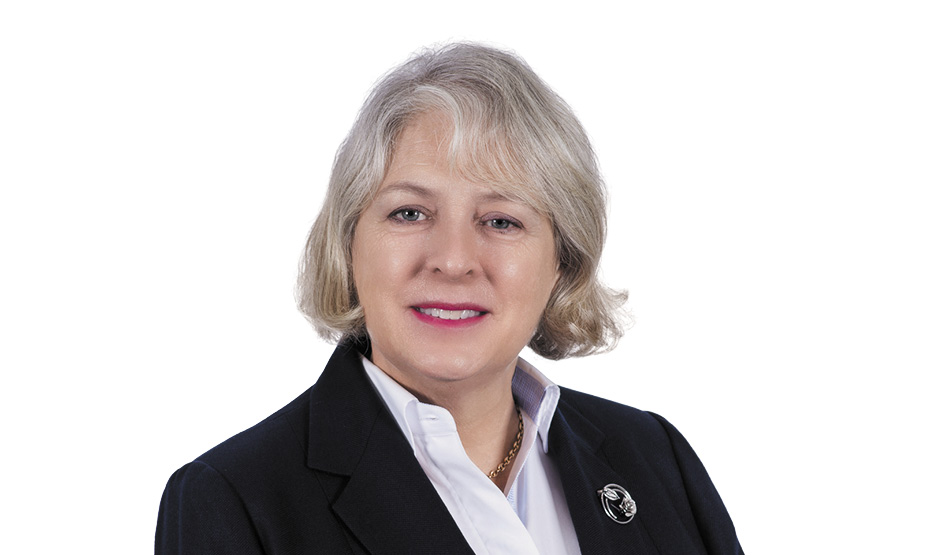
The Engagement Partner on the audit resulting in this independent auditor’s report is Gary Pickering.

Chartered Professional Accountants
Hamilton, Bermuda
12 March 2025